
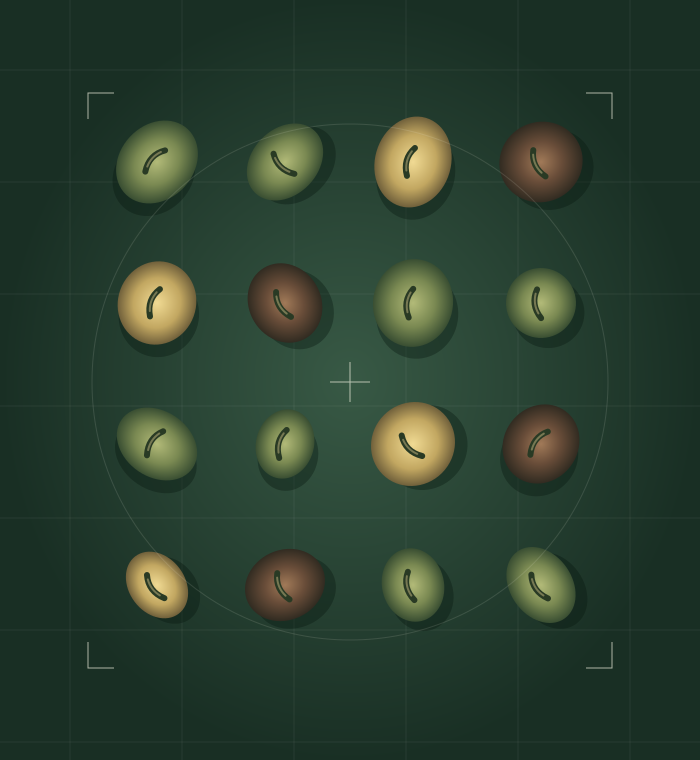
Genomic resources
Own reference genomes, resequencing resources and marker-design workflows.
Genetic diversity, genomics, phenotyping, controlled generations and data. Each has a role. None works in isolation.
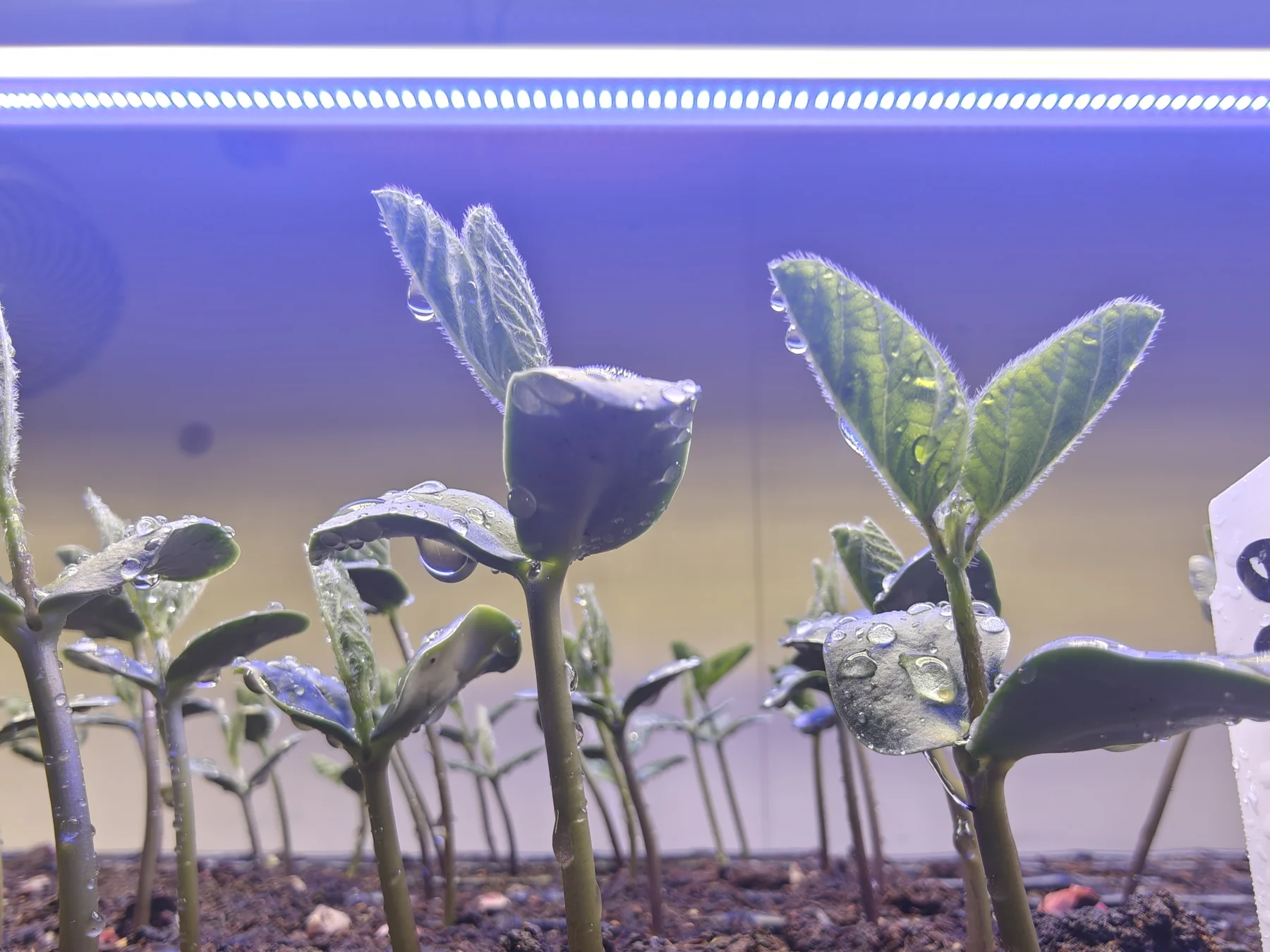
Genebank accessions, landraces and wild relatives widen the options beyond elite-by-elite crosses. The starting material should answer the breeding question, not simply be what is already on the shelf.
Reference genomes, resequencing and KASP marker design connect genetic variation to selection. Markers are evaluated in the relevant breeding backgrounds before they guide decisions.
Field observations and controlled assays address the traits that matter: adaptation, standing ability, disease response and market quality. Good phenotyping remains the test of any genomic prediction.
We help breeders set up speed-breeding environments and crop-specific protocols, from lighting and temperature to generation management. PROTISEM does not own a speed-breeding facility.
Connect plants, pedigrees, samples, markers and plots in one information flow. An in-house LIMS and bioinformatics server connect pedigrees, plants, samples and plots, keeping selection decisions traceable.
Generation advancement is valuable when it brings the next useful selection decision closer.
Controlled environments allow light, temperature and generation management to be designed around the crop. They do not remove the need for reliable seed, useful crosses or accurate phenotyping.
Our approach connects generation advancement to the breeding objective. Some traits can be followed early with a marker. Others need a controlled assay. Agronomic and market performance still need the appropriate field and product evaluation.
Our own breeding work connects the same types of capabilities we help other teams establish.
Own reference genomes, resequencing resources and marker-design workflows.
Field phenotyping and crop-specific challenges for adaptation, disease and product quality.
We help breeders set up speed-breeding environments and crop-specific protocols, from lighting and temperature to generation management. PROTISEM does not own a speed-breeding facility.
Assay design, genotype interpretation and quality control connected to selection.
In-house LIMS and links between pedigrees, plants, samples and plots.
Infrastructure and analysis workflows that turn genetic data into usable breeding information.